Minecraft Guides
How to Make Minecraft Cake

Marko Kulundzic

Cake is one of the few food items in Minecraft that you place rather than eat directly from your inventory. This makes it useful for multiplayer situations where several players need quick health restoration from a single source. Understanding how to craft cake efficiently requires gathering specific ingredients that aren't always obvious to new players.
Ingredients You Need for Minecraft Cake
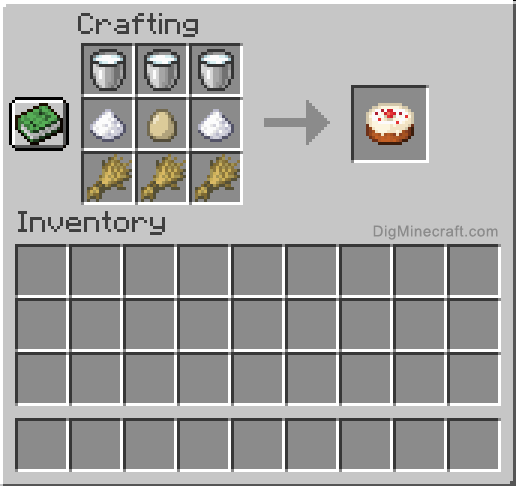
The recipe requires seven ingredients arranged in a specific pattern. You need three milk buckets, two sugar, one egg, and three wheat. Each ingredient comes from different sources, which means you'll need to set up multiple resource systems before you can bake your first cake.
Milk buckets come from cows or mooshrooms, which you can find in most grassy biomes. To obtain milk, right-click on these animals with an empty bucket in hand. What makes milk particularly convenient is that the bucket returns to your inventory after crafting, so you don't lose the buckets permanently. This mechanic differs from most Minecraft recipes where containers disappear, making cake crafting more resource-friendly than it initially appears.
Sugar comes from sugarcane, which grows naturally near water in most biomes. While you can also obtain sugar from honey bottles or by crafting it from honey blocks, sugarcane remains the most reliable source because it's easier to farm in large quantities. When you plant sugarcane near water on sand or dirt blocks, it grows up to three blocks tall without requiring any additional farming effort on your part.
Eggs drop from chickens every five to ten minutes, making them a passive resource that accumulates over time. Setting up a small chicken farm with six to eight chickens produces enough eggs for regular cake crafting without much management. Beyond eggs, chickens also provide raw chicken and feathers, which makes them one of the more valuable farm animals during early gameplay stages.
Wheat requires both farming infrastructure and patience to produce consistently. You start by planting wheat seeds obtained from breaking tall grass, then wait for the crops to mature over time. However, bone meal accelerates growth significantly, reducing wait time from roughly 60 minutes down to instant maturity with just a few applications. Since each cake requires three wheat stalks, you'll need a modest farm to support regular cake production without depleting your supplies.
The Crafting Recipe Pattern
Once you've gathered all your ingredients, you're ready to combine them at your crafting table. The arrangement follows a specific pattern that you need to replicate exactly:
- Fill the entire top row with three milk buckets
- Place one sugar in the left slot of the middle row
- Put the egg in the center slot of the middle row
- Add the second sugar to the right slot of the middle row
- Complete the bottom row with three wheat
Following these steps produces one cake, which appears in the crafting output slot. What's particularly helpful about this recipe is that the three empty buckets return to your inventory after crafting completes. This means you don't lose the buckets permanently, which is important because new players often worry about this detail. You can immediately reuse these returned buckets for gathering more milk or for other purposes like water transportation.
Placing and Eating Cake
Cake functions differently from other food items in a way that affects how you use it. Unlike most foods, you cannot eat cake directly from your inventory. Instead, you must first place it on a solid block, then right-click to consume one slice at a time. Each cake provides seven slices, and each slice restores one hunger point along with 0.4 saturation points.
This consumption method creates specific advantages that other foods don't offer. Multiple players can eat from the same cake, which makes it particularly efficient for group situations where several people need food access. You can also place cake strategically near dangerous areas or boss fights, allowing quick health restoration without needing to manage your inventory during intense combat situations.
However, the placement requirement also creates some notable limitations. You cannot eat cake while moving around, and you cannot take it with you after placing it down. Breaking a placed cake destroys it completely without dropping anything, which means you lose the entire food source if you need to relocate it. Because of these constraints, cake works best as a stationary food source rather than something you carry for portable nutrition on adventures.
Practical Uses in Gameplay
Cake shines in multiplayer environments where several players need convenient food access at the same time. When you place a cake in a central base location, it serves as a communal food source that everyone can use without trading items. This approach works particularly well during early-game scenarios when individual food supplies run low and players haven't yet established personal farms.

From my experience managing multiplayer servers, strategically placing cake near respawn points significantly reduces food scarcity problems during difficult gameplay phases. New players who die repeatedly can access immediate nutrition without relying on complex inventory management, which can be overwhelming when they're still learning the game. This small detail substantially improves the early multiplayer experience by removing one source of frustration.
The seven-slice system also creates interesting applications in redstone contraptions for players who enjoy technical builds. Because cake emits different comparator signals based on how many slices remain, you can build mechanisms that respond to consumption patterns. Adventure map creators frequently use this feature to track player progress or create puzzle elements that require specific amounts of cake consumption to proceed.
Alternative Food Sources and Comparisons
Most players prefer other food sources for their regular gameplay needs because they offer better efficiency. Cooked meat from animals restores more hunger per item and provides better saturation values, which means you stay full longer. Golden carrots offer the best saturation value in the game, making them the superior choice for extended activities like mining expeditions or long exploration trips.
When you consider the effort required, cake demands more complex ingredient gathering compared to simpler food options. Breeding cows for milk, farming wheat, and maintaining chickens requires more infrastructure investment than basic hunting or simple crop farming. This complexity explains why experienced players typically reserve cake for specific situations rather than using it as their primary nutrition source.
However, cake offers unique benefits that justify occasional crafting despite these limitations. The ability to share food among players without inventory trading streamlines multiplayer cooperation in ways that other foods simply cannot match. The stationary nature also works well for decorative builds, as cake serves as an easily recognizable furniture piece in kitchen designs and adds authentic detail to player-created structures.
Setting Up Efficient Production
If you decide to produce cake regularly, organizing your resource systems for maximum efficiency becomes important. Start by building a small cow pen near your crafting area with at least four cows, which ensures you always have milk access without needing to travel far from your base whenever you want to craft.
Create a dedicated sugarcane farm with at least 20 plants to maintain steady sugar production. This quantity produces enough sugar for multiple cakes plus extra for other recipes like pumpkin pie, giving you flexibility in your food crafting. While automated sugarcane farms using observers and pistons increase production substantially, manual harvesting works fine for casual crafting needs if you're not interested in complex redstone systems.
Maintain a chicken coop with automatic egg collection to minimize the time you spend gathering resources. By placing hoppers under your chickens, eggs funnel directly into chests, which eliminates the need to chase chickens around enclosed spaces every time you need ingredients. Six to eight chickens provide sufficient egg production for both cake and pumpkin pie crafting without creating excess that you won't use.
Wheat farming benefits most from automation because it requires the most space and time to produce. Large fields with water channels allow quick planting and harvesting across multiple rows simultaneously, which speeds up your workflow considerably. Bone meal from skeleton farms accelerates growth dramatically, turning what would be an hour-long wait into instant maturity. I've found that a 9x9 wheat field keeps pace with other ingredient production when you're using bone meal efficiently, providing enough wheat for regular cake crafting without creating a bottleneck.
Storage and Planning Considerations
Keep in mind that cake cannot stack in your inventory, which affects how you plan for longer trips. Each cake occupies one full inventory slot regardless of how many you craft, which creates storage limitations. This restriction becomes particularly important for adventure maps or long expeditions where inventory space often determines whether you succeed or fail at your objectives.
For this reason, you should plan cake usage around specific needs rather than trying to create large stockpiles. Craft cake when you need stationary food sources or when hosting multiplayer sessions where shared resources matter most. The non-stackable nature combined with the placement requirement makes cake impractical for general food reserves, so focus your bulk storage on more versatile food options instead.
Final Thoughts on Cake Crafting
Making cake in Minecraft requires gathering milk buckets, sugar, eggs, and wheat, then combining them in the correct crafting pattern. While cake demands more preparation than simpler food sources, it provides unique benefits for multiplayer situations and specialized builds. Set up organized farms for each ingredient if you plan regular production, and use cake strategically rather than as your primary food source. The ability to share nutrition among multiple players makes cake worth crafting when cooperation matters more than individual efficiency.